I have likely been mentally ill my whole life, although as with so many others it really manifested during puberty. Also like so many others, I didn’t get a correct diagnosis until I was in my twenties: (largely)-treatment resistant bipolar I disorder with psychotic features. It’s a lot of words, I grant you; although I will also share that it doesn’t come close to doing justice as a descriptor of the anguish, torment, shame, and loss I have suffered as a result of living with that diagnosis. I would like to add my voice to the many who advocate for a new national mental health emergency three-digit number, separate from 911. But there are some problems, some concerns, the biggest of which is current surveillance and the incredibly invasive capabilities the hotline company seeks to acquire and implement.
I have had two police encounters because of the expression of some really bad genes I possess along with some fairly horrific life circumstances. My 911 stories, whilst not remotely dramatic compared to others’, serve as solid evidence that there needs to be two numbers—two phone lines. If the second one dispatched mental health workers, I would be grateful. But we all know who bangs on the door after you call 911, and under the current proposal, they would be dispatched even if you called/texted/chatted with the suicide help line.
I was a pretty blonde in my early thirties, an upper manager with Google the first time I tangled with an officer; I was an aging-reasonably brunette in my forties the second time officers visited my home. The situation is dire for my mentally ill fellows who are Black. When a pretty, white girl who works in tech management can be threatened with jail for an action she obviously did because she is sick, it becomes clear that mental illness is the target. A police response is wholly inappropriate for a mental health crisis. It’s also the last thing someone calling an “anonymous” hotline expects.
Some years ago my life started to melt down. My husband had just left me for another woman; my only true friend suddenly fell in love with a girl and moved down to LA with her. He had been my boss, so the shock reverberated particularly severely. We were falling into a recession in 2008, and my company did not handle the situation in a manner in which I found entirely ethical and certainly not practical. My new boss’s first words to me were, “I don’t know what to do with you.” And he was right. All in all, my life was in serious crisis. I span out of control. I knew I didn’t have enough for a fatal dose. But I hoped I had enough to hurt myself. I swallowed the pills.

In one of those weird quirks of fate, my soon to be ex-husband walked into the house he had recently moved out of. He found me drooling on the couch, not especially responsive. He called 911. I don’t remember what he told them. I don’t remember most of my ordeal, to be honest: retrograde amnesia from the medicine I took. I have one vivid memory, and that’s it. It’s enough.
A police officer and paramedics arrived within minutes of my ex-husband’s call, and squeezed into the entry way of my small, but tidy house. I remember seeing the EMT and the officer practically upside-down, my head was lolling off the couch. Then the policeman reached for his utility belt and he shook his shackles at me menacingly. “She’s going with you, or she’s coming with me,” he said in a hostile manner, addressing the EMT. I was too far gone to imagine myself stumbling weakly to a squad car in handcuffs that looked very large for my 5’3, 110lb frame. I would have been terrified beyond belief if I had been able to think about it. However, the thought did set in upon recovery and sent me into paroxysms of tears and hyperventilation. If the EMTs hadn’t essentially wasted resources taking my sorry self to the hospital where I lay on a gurney for the day feeling increasingly more responsive and more hungover, instead of letting it all wear off at home once the EMTs explained that I was safe, I would have been jailed. My life was not in jeopardy, and the EMTs confirmed it. I had likely explained I wasn’t suicidal, just in a terrible amount of psychic pain and overwhelmed by a serious mental illness. At least I think I said all that. The truth is, I had a close call. Being jailed is the biggest fear in my life, followed by drowning.
For the record, my overdose did hurt. Not just in terms of the trauma that ensued and haunts me still, but because for ten days afterwards I had the greatest headache and upset stomach of all time. “Mission accomplished.” I muttered as I went for the CINTAS box on the far wall to get yet more antacids and painkillers as I attempted to make it through a work day in sunglasses. It’s not what one envisions as the aftermath. To end this story on a positive note, my psychiatrist was not overly concerned with my actions, just the fact that I was in that state of mind to begin with. He knew it wasn’t an attempt on my life, although it was an act of self-harm. I certainly wasn’t likely to repeat my mistake though, was I?
The next time I overdosed, ten years later, it was a suicide attempt, although I deliberately did not pick psychotropic medication. I survived, but the medication has a cholinergic affect—it can make you constipated. I have a GI illness, a symptom of which is slow motility. I hadn’t been taking my medication for this problem for the several Hellish days leading up to the event. I had now become so constipated I was forced to go to the hospital several days after the attempt. That visit is another tale for another time. I was discharged at the end of the following day. I got home and sent my useless octogenarian psychiatrist an incoherent but allegedly self-threatening email. (Any doctor more compos mentis would not have read it as a serious threat.)
The next morning was the first day after the autumn time change. It doesn’t matter if it’s “gain an hour” or “lose an hour”: I spend the next week oversleeping by a lot. I was woken up by the sound of my husband’s voice yelling in a clearly strained voice through the open front door, “Honey, the police are here.” It’s just as well we have no neighbors close by! But the police separated the two of us. That’s probably what they are told to do in their week-long training class: Separate the currently fragile person from their source of support. Police spend one, two weeks, training in handling mental health. How many years does it take to become a licensed psychologist or social worker? In other countries, like the UK, police spend years, not weeks, learning special duties like interacting with the mentally ill. The fact is, they separated me from the only person I trust and whom I depend on in any kind of emergency. And this was in my mind a huge emergency: two policemen were in my house.
One of them positioned himself in front of our living room, surveying our possessions thanks to our open-space floor plan. I could see him from the bedroom, watch his eyes rove around our belongings, and I felt instantly violated. He didn’t speak. The other officer came just inside the bedroom door. “Are you decent?” he questioned loudly. I sat up. “Do you know why we’re here?” He asked. The only thing I could think of when I was mostly asleep was, “my husband’s rehab?” My husband is a non-mentally ill (and sober) alcoholic. I don’t drink. “Your husband’s rehab?!” the officer barked at me with untamed incredulity, and I physically withdrew. “No, I have no idea why you’re here.” I said, meekly backtracking. The officer explained that my psychiatrist had called them. “On your discharge papers it says you need to meet with your psychiatrist.” How he got that information I don’t know. I said something about not particularly liking my psychiatrist. In an unnecessarily loud voice the officer condescendingly explained, “If you don’t have health insurance there’s the Fair Oak Clinic—it offers free, walk-in referrals.” I sat there dumbfounded: my health insurance plan was much better than the police officer’s, I guarantee it. That implicit assumption: if I have poor mental health I must not have health insurance, is absolutely fallacious. The officer finally delivered his last cautions and recriminations and left with the other. My husband rushed into the house.
That encounter with police, when someone called 911 for false reasons, combined with what happened back in San Jose years earlier torments me still. For six months after I had an officer lecture me while I felt vulnerable under my night clothes I physically clenched my seized-up gut with my hands squeezing hard and doubled over whenever I heard a siren. Any reminder of police was too much. I didn’t have experiences nearly as horrific as others, but they were enough to scar me. They were enough for me to know that I would never call 911 in a mental health emergency—for myself or someone else. I would direct that person to a hotline. Although even that is no guarantee police won’t end up knocking on the door. Yes, I am strongly for a new national mental health emergency number. However, I have some reservations.
The government (Substance Abuse and Mental Health Services Administration — SAMHSA) has given the contract for 988 to the company called Vibrant Emotional Health that runs the National Suicide Prevention Lifeline (NSPL). If you visit their website, you might notice that there’s no privacy policy. That’s because they practice surveillance on their callers and request that officers be dispatched, calling it by twee euphemisms like “active rescue.” People who have called the helpline for what they believe is anonymous support have been surprised by police banging down their doors and incarcerating them in hospitals, even if they are not at imminent risk to themselves or others.
These behind the scenes referrals to police are labeled “life-saving” and are supported by major mental health organizations, including the National Alliance for Mental Illness (NAMI) and the American Foundation for Suicide Prevention (AFSP). However those on a NSPL “lived experiences” committee rightly voiced concern about just what happens when you send untrained police — no, a week’s course does not count as ‘training’ — into a situation of extreme emotional volatility. These encounters are downright dangerous for people of color and those who identify as queer or trans. But they can be traumatic for any caller. Eighty-six percent of calls placed to 911 for welfare reasons result in forced hospitalization.
It is a terrifying experience to be locked up because someone thinks you have a mental health problem. You can’t struggle; you can’t call anyone; good luck in resisting neuroleptic drugs being shot into your arm or forced down your throat. You were having a crisis: now your crisis has increased ten-fold. You are locked into a room for observation with no windows (glass could be used to cut yourself or others), or mirrors (glass again). They have already taken away all your belongings, your belt and your shoelaces. If the removal of such items leaves you without clothes, they might give you pajamas so you can feel particularly vulnerable. You are forcibly separated from everyone you love and who loves and supports you, and from any items that bring you relief or comfort. You are lying their with nothing but your own head for company. And before the hospital pickles it, you replay the recent events over and over, cementing the trauma.
You are observed from cameras; the bed is bolted down prominently in the room for easy viewing. Other patients outside your room are shouting and acting aggressively. You can’t receive visitors until they decide you can. You are completely trapped against your will. But don’t worry — it’s all “for your wellbeing.” And the point of these encounters is to marinate your brain into submission. There is no lasting healing that comes from these hospitalizations. In fact, in the best cases you receive so much sedation you don’t remember most of the time you’re inside. The trauma from these kinds of abductions is astronomical. People calling 988 won’t imagine they are being surveilled for a forced intervention, but they will be.
A quick note that the hospital is a very good place to get someone who is manic or has schizophrenia spectrum disorder on some medication that will end their internal persecution and allow them back into society. The psychiatric hospital does have its place. But it’s not clear that it’s the right place for someone who is suicidal. Yes, they have the capability of completely preventing you from carrying out any plan, but usually someone doesn’t need such a heavy-handed response.
The situation regarding 988 is even more pernicious than you would imagine: Vibrant/NSPL is lobbying the government to acquire the nascent next-generation 911 geotracking technology that would provide the location of a caller to within 3 feet. It’s fair to say that someone calling 911 knows their call is traced, and indeed, you want your first responders to find you wherever you are calling them. but that’s not the case with 988 at all. In fact, most callers will be seeking anonymity. Besides, although the intention is to help those who call 911, some police in the US and Canada have started using the tracking technology for real-time surveillance. Normally they would need a warrant for such activity, and as a result, the infant technology is already at the source of numerous lawsuits. Until now, no one suggested throwing open the unregulated NG911 for uses by other people and organizations for entirely different purposes than 911 emergency service response—such as the surveilling, tracking, and incarceration of people who are struggling with emotional distress.
Vibrant/NSPL argued that everyone who calls, texts, or chats through the new 988 number should have their personal information and exact current geolocation to within three meters exposed to NSPL call centers automatically, immediately, and by default.
–Rob Wipond (Mad in america), Jan 29, 2022
NSPL leaders argued disingenuously to the FCC that they should be able to automatically route all online and phone contacts to the nearest NSPL call center based on that person’s current geolocation. They claim this would help NSPL responders give callers relevant local referrals to resources and services….
Furthermore, Vibrant/NSPL leaders argued, rather than having to contact a 911 dispatch center to initiate a trace, all NSPL call centers should themselves be able to directly access every caller’s personal information and precise current geolocation. This would, they suggested, “enable speedier emergency responses.”
Ah, but the caller might not wish for a “speedy emergency response!” If someone calls the helpline, they are open to help. That’s important and shouldn’t be overlooked. What an unfathomably breech of trust to send ill-equipped police with guns into such a fragile situation. Thanks to the ever-increasing militarization of police, trained by private paramilitary outfits that refer to US citizens as “enemy combatants” and are primed to kill, those in the vulnerable position of having a mental health emergency are not going to see “rescue” in the form of a police officer pounding at the door: they are going to think threat of bodily harm, possible forcible abduction, or worse.
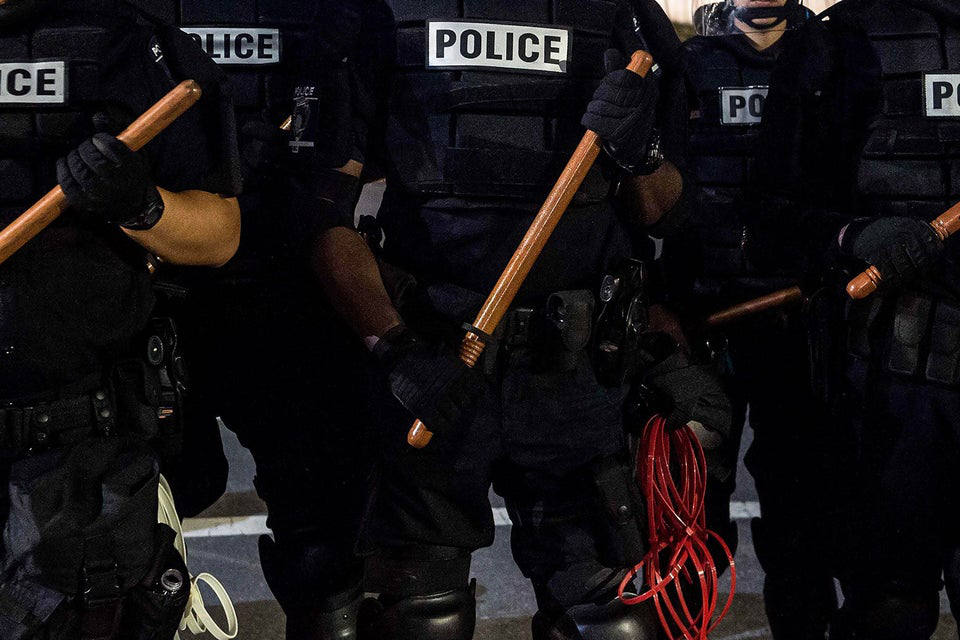
People with an undiagnosed mental illness are 16 times more likely to be shot by law enforcement. For sufferers of color and for those who identify as LBGTQ+ or trans, having cops at the door is an extremely scary — and risky — situation. The police have shown again and again their contempt for these constituents, and the last thing someone who identifies as queer wants is police at her doorstep no matter the crisis. There is no doubt that police reform needs to happen, and it needs to happen yesterday. Meanwhile, the suicide prevention lifeline has no business aggravating this mess.
People call the helpline for advice, not to be betrayed by a group of people for whom many believe act as if they are the law rather than agents trying to enforce it. Officers who joke after they shoot someone having a mental breakdown are not simply exceptions. After the sufferer does get out of the hospital they are committed to, not only will they have significant trauma to process, they are unlikely to turn again to any American mental health service. If their breakdown involved anything criminal, like assault — say, slapping someone who first pushed them — the officers will (1) shoot first and ask questions later, and (2) make sure that if the “suspect” survives they are prosecuted and jail-bound.
Essentially, if you are not an immediate risk to your life but you have a poor call-responder, you might pay for that for the rest of your life. I want to not understate how unpleasant it is to be forcibly hospitalized. For what it appears, the Lived Experiences Committee (LEC) of the NSPL has tried hard to sound the alarm.
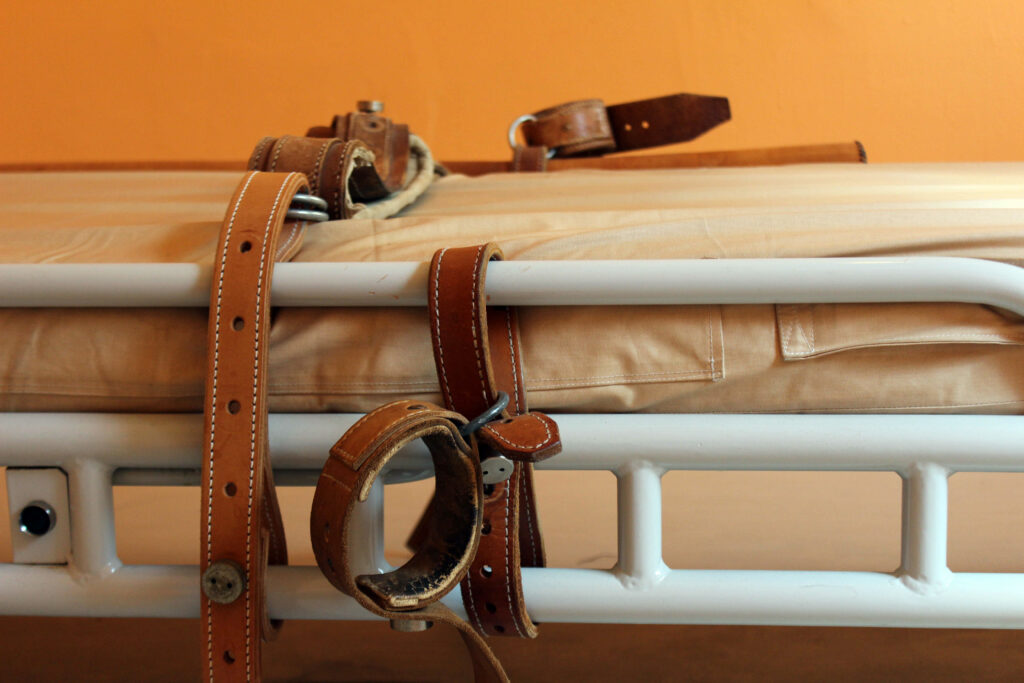
At the hospital, at the end of your lunch, the nurses will wait until you have put your tray away, and they will then inspect your plate for what you ate and what you didn’t eat. Expect follow-up if you didn’t eat enough or the right foods. Although trained to appear they’re not observing your every move, they are dissecting everything you say and do. If a nurse is about to make a medication mistake, as has happened to me, there is no recourse. You simply take the incorrect medication. The nurse will, after all, swear that she is right.
Depending on how good your state is, you might be hospitalized at a regular hospital rather than in a psychiatric facility or in a psychiatric ward. I moved from the 16th ranked state in the country for mental health to the one dead last: Oregon. The discrepancies are breathtaking. My experience being hospitalized in Oregon is an experience I wouldn’t wish on anyone. The poorly trained doctors actually berated me for two days for my mental breakdown. These are educated people, supposedly in healthcare, and yet they don’t know you shouldn’t harangue someone who is in a mental health crisis. Being hospitalized under any circumstances is extremely traumatic. And if you don’t know it’s coming? Well, that’s even worse.
Vibrant/NSPL leaders are well aware that many people whose calls get traced are not in actual immediate physical danger; they told the FCC repeatedly that call tracing only occurs “in rare but urgent circumstances” when “without intervention the individual is likely to sustain a life-threatening injury” and it’s “required to save a caller’s life.” These misleading descriptions of call tracing as always “life-saving” were supported in submissions from other mainstream mental health organizations, including NAMI, the AFSP, and Mental Health America (MHA).
Throughout the discussions between Vibrant and the FCC, no information was shared with the American Civil Liberties Union (ACLU). In a call with a reporter, Susan Mizner, an attorney and director of the ACLU Disability Rights Program, criticized the potential that 988 could come with precise geolocation tracking as a “huge” and “worrisome” possibility. The ACLU met with those working in privacy and electronic surveillance for a cross-sector discussion. Mizner said all sides agreed that geolocating callers to the Lifeline could be beneficial—but only up to a point. “We absolutely support routing the calls to the correct call center,” said Mizner. “But routing the call doesn’t require geolocation to three meters.” Sending officers to intervene “against the will of the person who has called,” she noted, “can lead to an escalation of the problem rather than solution.”
Even if we take shooting out of the equation, callers to the NSPL are involuntarily hospitalized at the rate of hundreds of thousands per year. This rate will almost definitely increase if 988 with geolocation is rolled out. According to Megan Iorio, senior counsel with the Washington-based Electronic Privacy Information Center (EPIC), current laws restrict how much of someone’s personal information — including their geolocation — that telecommunications providers are allowed to disclose to third parties. Police typically have to get a search warrant from a judge to obtain the kind of personal information that Vibrant Emotional Health and the National Suicide Prevention Lifeline want to obtain automatically on every 988 caller, texter, or chatter.
Iorio explains that courts have permitted exceptions to warrants if the circumstances are such that people already have a “reasonable expectation” that their personal information, home, or belongings might be accessed or searched—for instance, if they call 911 in an emergency, or are crossing an international border. However, Iorio spells out that when people call the NSPL or any emotional crisis hotline “It’s not clear that that’s people’s reasonable expectation at all. I would say that it’s the exact opposite. At the Lifeline website, there is nothing there to indicate that forced referral to police is a potential consequence of calling for mental health services.” Furthermore, “Lifeline encourages not just people who are suicidal, but people who just want to talk to a mental health counselor to call. And people who are concerned about other people. So the justification for giving the operators of 988 exact geolocation data for referral to police is incredibly thin.” Iorio says that if EPIC had known about the situation they would have weighed in. If the occasion arises, EPIC will definitely make recommendations, according to Iorio. But what are we to do meanwhile?
Iorio is especially concerned in light of the fact that Vibrant Emotional Health and the National Suicide Prevention Lifeline—in essence representing government through their partnership with SAMHSA—are already engaged in the collection of at least some callers’ personal information, yet they do not appear to be handling even that data responsibly. “I went through the Lifeline website yesterday and could not find a privacy policy for the calls,” Iorio said, “What happens to the data that they’re already collecting?”
Iorio suggested that concerned people should write to senators or Congressional representatives, or try to draw media or public attention where government representatives might see it. Also, if mental health-related organizations started to speak out against 988 geolocation tracking rather than in support of it, that could make a difference.
And that’s what I’m doing: Raising awareness, because this is something worth fighting for. Iorio also voiced unease about the precedent that could be set by all this. “If we extend the emergency 911 location data services to 988, Lifeline, and this nonprofit [Vibrant Emotional Health], where does it end? What justification will come next, who else will be able to use it?”
“In the moment, they might be referring you to the right [call] center or the mental health services that are closest to you. But what happens to that data afterwards? Are they storing it? Are they using it for other purposes? Does that become a target for hackers?” There are many unresolved questions, and they all point to the NSPL and Vibrant not only not automatically acquiring data that typically a judge has to authorize, but reviewing their current policies in light of the inability of police officers to appropriately respond to mental health emergencies. Being committed is a terrible and terrifying experience, and it’s not one callers are expecting. The NSPL and Vibrant are guilty of breaking the public’s trust, as well as being complicit in the utter trauma of having police cart sufferers away, or, if they’re a POC, shooting them. The 988 number is desperately needed at a time when mental health services are in short supply and woefully inadequate to meet the need caused by the pandemic’s fallout. Not adding significant trauma to people going through a crisis seems like an important goal, and not one that can be reached with the borderline indiscriminate way in which some cases are routed to 911. Next-generation geotracking is not required for the National Suicide Prevention Lifeline to provide its services to the public; it likely violates the sufferer’s rights (which is why a warrant is typically needed); and no one knows what happens to that data.
Read the original story
I was very pleased to find this site. I wanted to thank you for your time for this particularly wonderful read!! I definitely savored every little bit of it and i also have you book-marked to see new stuff in your site.
fzksywtmwkdyftvykxmyffgwffunxv
zwkqqlnfzjtzuxyhsjnmtvxumsyjgi
vqxdwwwsnhoowqemjkohdrnjkpnghy
https://shorturl.fm/rHRIj
https://shorturl.fm/n64Cc
https://shorturl.fm/Lz0oU
https://shorturl.fm/0MEUo
https://shorturl.fm/B9AS2
https://shorturl.fm/ma4gf
https://shorturl.fm/2b7YF
https://shorturl.fm/OhWJa
Как капсульный дом выдерживает российский климат с морозами и снеговой нагрузкой?
Как правильно выбрать Впн для повседневного использования?
Почему некоторые сайты блокируют подключения через Впн?
Как маркетинговое агентство реагирует на форс-мажоры — провальные запуски, просадки трафика?
Почему домашние животные иногда прячутся под кроватью или диваном?
Чем рискует исполнитель, предлагая продвижение сайта с гарантией?
продвижение молодых сайтов продвижение молодых сайтов prodvizhenie-molodyh-sajtov.ru .
Какие домашние животные требуют минимальных затрат на содержание?
Что нужно подготовить со стороны клиента, прежде чем заказать продвижение сайта?
Что происходит с позициями, если заказать продвижение сайта, а потом резко остановить работы?
Как Гео продвижение сайта влияет на видимость в Google Картах?
Как маркетинговое агентство подходит к аналитике и какие инструменты использует?
Почему домашние животные тащат еду из миски в другое место перед едой?
Как проверить отзывы и кейсы перед тем, как заказать продвижение сайта?
Seo оптимизация и продвижение сайтов — можно ли делать всё самостоятельно?
Как создание сайтов влияет на скорость загрузки и Core Web Vitals?
Как seo под ключ помогает при запуске нового направления бизнеса?
Seo продвижение молодого сайта — сколько реально ждать первых позиций?
seo оптимизация сайта seo оптимизация сайта .
Как ускорить seo продвижение молодого сайта без риска попасть под санкции?
Как нейросетевые алгоритмы меняют продвижение сайта в поисковых системах?
SEO продвижение под ключ — включает ли оно написание контента или это оплачивается отдельно?
Может ли неправильная seo оптимизация сайта привести к санкциям поисковика?
Сколько стоит SEO продвижение под ключ для интернет-магазина с 300 позициями?
jlhozosuksgowhtqeropglslqtixhk
https://shorturl.fm/sfZAC
https://shorturl.fm/dYgpM
https://shorturl.fm/LLxtH
https://shorturl.fm/zF7ox
https://shorturl.fm/581O0
https://shorturl.fm/yuaTX
For those of you into sports betting, I stumbled across estatisticasbravobet.com. Honestly, the stats they provide are pretty helpful for making informed bets. Not a guarantee, obviously, but it beats guessing! Check it out estatisticasbravobet.
Just logged into fg777login and felt like sharing. The signup process was smooth, and I was playing in no time. Good selection of slots if that’s your thing! Give it a try fg777login!
Hey guys, saw a few people talking about jili30login. I signed up myself last week and so far, so good! The interface is clean and easy to navigate. Worth checking out jili30login.
https://shorturl.fm/qLtxY
https://shorturl.fm/mrqZM
https://shorturl.fm/0JeJ8
https://shorturl.fm/yZQrt
007gamepc seems like a hub for pc games. Is it a download site or an online gaming website? Thinking about trying it out. Check it out here 007gamepc
What about 32winzk1? I’m checking up on it, it is supposed to be a good gaming website! See it for yourself: 32winzk1
Hey, I’m checking on 585bet1. I think its a good choice, have you ever tried it? If not, feel free to check it yourself: 585bet1
https://shorturl.fm/4iNRL
m5qs6y
https://shorturl.fm/OGu9X
https://shorturl.fm/NrN7U
https://shorturl.fm/Gtm3E
https://pesnimp3.net/2.html
https://shorturl.fm/G2iCx
https://shorturl.fm/JWoxX
https://shorturl.fm/sbc5K
https://shorturl.fm/gKhRZ
Heard some buzz about panaloko88 on Dafabet. Seems interesting. Gotta check it out and see what all the fuss is about. Maybe it’s my next big win!
Yo, the Dafabet app is seriously clutch. Makes betting so much easier on the go. No lag, good odds, what more can ya ask for Check it out here: dafabet app
Bongda.net is my go-to spot for football updates! Always reliable and super easy to navigate. Check it out bongda.net for all things football!
Последние новинки музыки 2026 скачать бесплатно https://shorturl.fm/naLA6
epdbfk
0zjwq6
https://shorturl.fm/kx3b5
https://shorturl.fm/Pq8fQ
8lsn86
https://shorturl.fm/12RDj
https://shorturl.fm/sft0F
https://shorturl.fm/rwVdE
https://shorturl.fm/NEtsz
ww888ww88 is my go-to portal for W88 gaming. Reliable access, good performance. Gets you right where you need to be. Try it here: ww888ww88
Heard some talk about vin5555k. Looks like a newer platform. Anyone tried it out yet? Might be worth a shot: vin5555k
Looking for a SCV388 link that actually works? scv388link seems to be the answer. Quick, and gets you to the games. Give it a try: scv388link
https://shorturl.fm/ZxQYY